

Our Story
First, a huge thank you to Dr. Frank Geipel and Dan Flynn.
Without them, this project would never have been possible.
The Dinner That Changed Everything 🍽️
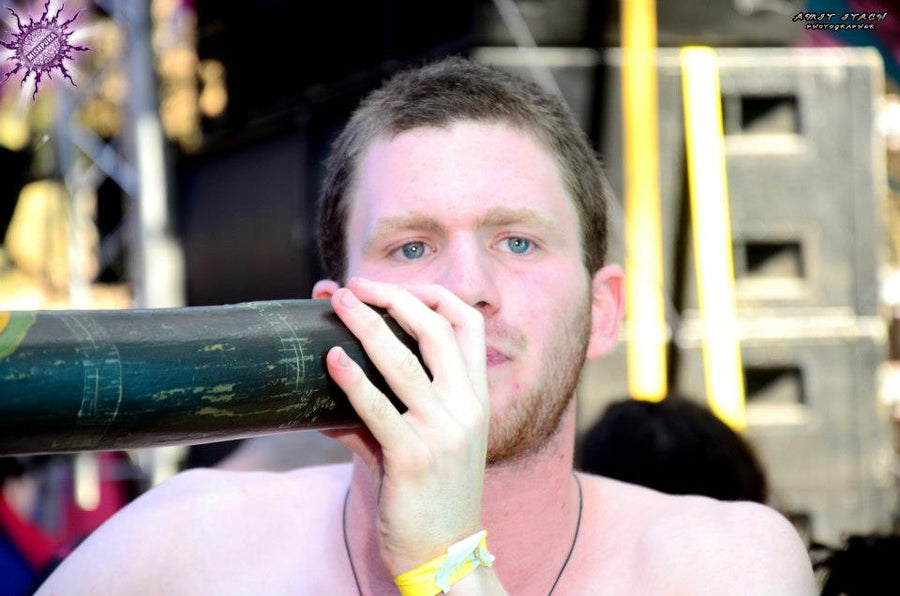
It started on an ordinary Friday night, at a family dinner nobody expected to remember. My uncle walked in carrying something I had never seen before: a long wooden instrument he called a didgeridoo. He put it to his mouth and played a handful of deep, resonant notes, and that was it. Something in me clicked.
“What is this?” I asked, already reaching for it. I didn’t let go for the rest of the night. Whatever it was, I was completely lost in it.
My uncle noticed. He handed me a plain PVC pipe and a challenge: “Learn to circular breathe on this, and I’ll get you a real didgeridoo.” I practiced nonstop for a week, barely doing anything else. The following Friday I walked back in and said, “Where’s my didgeridoo?” I had done it. Circular breathing, mastered. That was the night my whole journey with this instrument began.
Becoming The Strawberry Man 🍓
After that dinner, I couldn’t stop. I played at parties, on street corners, at psytrance events, anywhere that would have me. The didgeridoo stopped being an instrument I owned and became part of who I was.
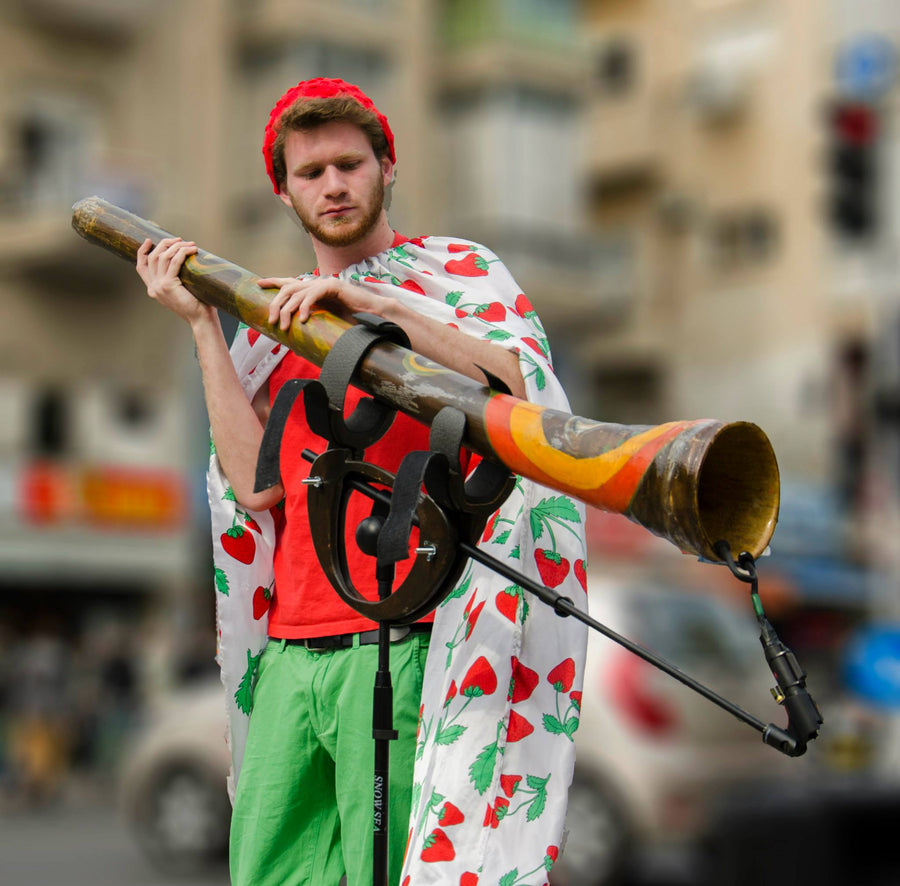
At eighteen, I went to Thailand with friends, full of energy and ready to have fun. I bought a ridiculous strawberry hat as a joke, and one night I climbed onto a stripper pole, fully clothed, and danced just to make everyone laugh. Total strangers joined in, and soon people were recognizing me because of that strawberry hat. The Strawberry Man had appeared almost by accident.
Back home, I brought that playful character into psytrance parties. I wore the hat, played, and handed out real strawberries to whoever was watching. People loved it, and before long I was being invited, and even paid, to do exactly that. It was ridiculous, hilarious, and somehow exactly right.
I Have a Problem with Planes 🧳
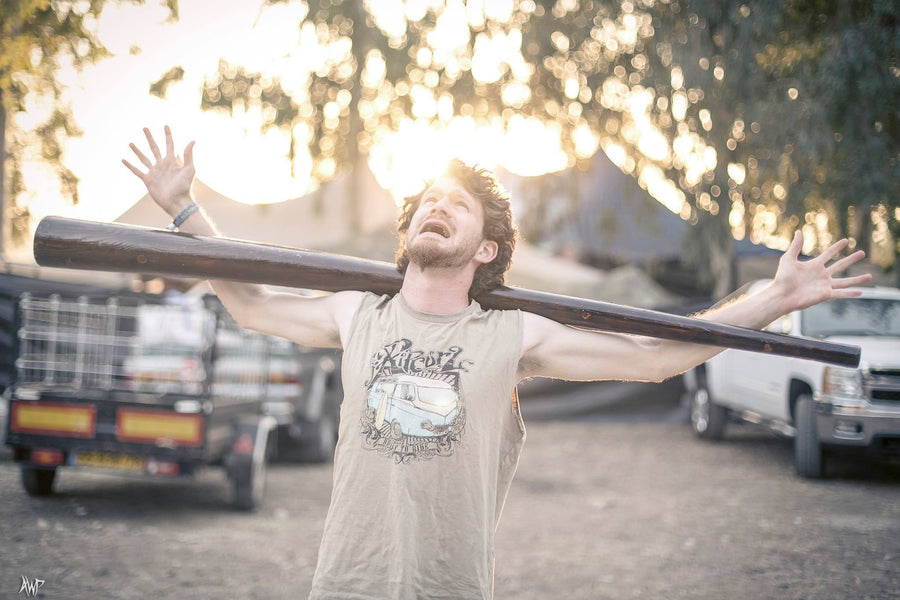
Then came a trip to India, and with it, a problem I hadn’t thought about: my didgeridoo did not fit on a plane. It was too long, too fragile, and I’d heard enough horror stories about broken instruments in transit to know I wasn’t willing to risk it.
But I couldn’t imagine traveling without it. I needed that sound with me.
That’s when an idea started forming: what if I could build a didgeridoo compact enough to actually travel with, without losing the soul and power of the real thing?
Bending the Rules (Literally) 🧠
A YouTube video changed things again. I saw Dan Flynn talking about his collaboration with physicist Frank Geipel. Their sound modelling and perfectly tuned instruments stopped me in my tracks. I was inspired, and I tried to reach that result myself.
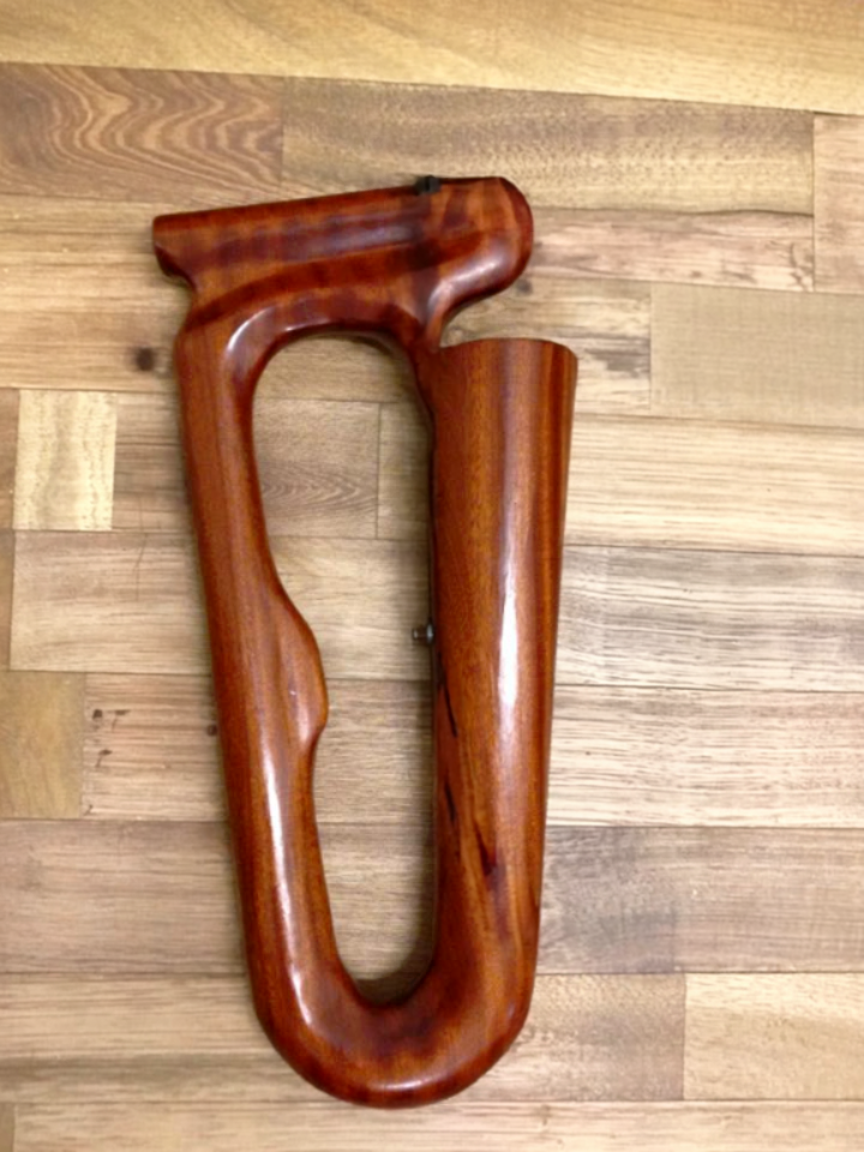
Eventually I got my hands on a didge with a powerful tone and genuine trumpet capability. It was good, almost perfect, but the sound still was not quite where I wanted it to be. The shape was not there either. I kept experimenting, but I could not get the result I had heard in my head.
I tried to reach Dan, but he rarely uses social media and I did not get an answer. So I kept working: chasing the sound, rethinking the form, and looking for the shape the Saxo-Didge would need to travel.
That is when I started bending the rules. Literally.
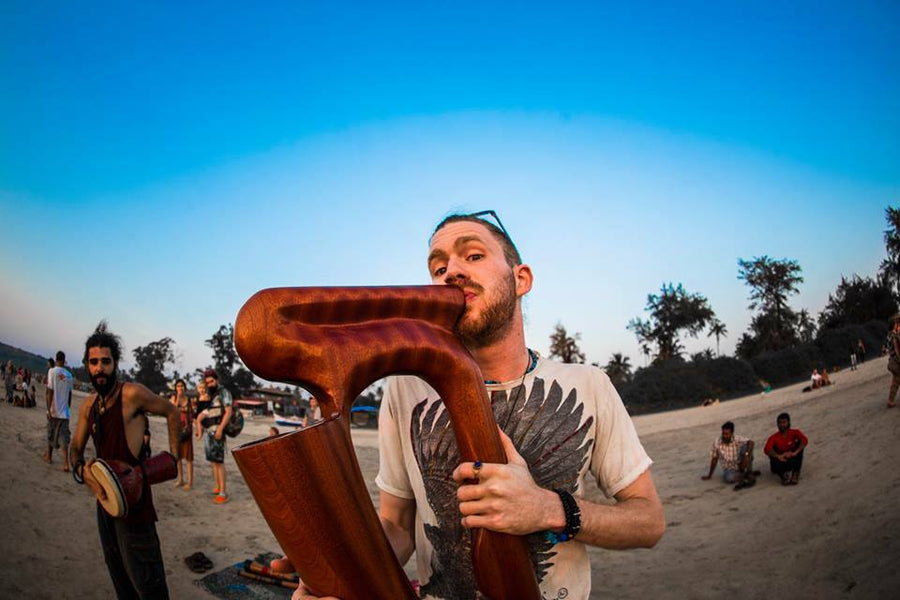
India: The First Test 🌏
India was the first real test for the Saxo-Didge, the first one I’d had, and I took it with me everywhere I went. The moment I started playing, people stopped. They’d never seen anything like it.
I played everywhere: chaotic markets, quiet backstreets, wherever I found space, and slowly I stopped just playing and started performing. Along the way I met other musicians, including a Japanese artist named Naoto, and we jammed together, experimenting with overtone singing on top of the drone. Inspired by DUB-FX videos, I started experimenting with beatboxing inside the didge too, trying to combine every technique I could find.
By the end of that trip, it wasn’t just a didgeridoo anymore. It had become something new.
Busking and Performing Around the World 🎶
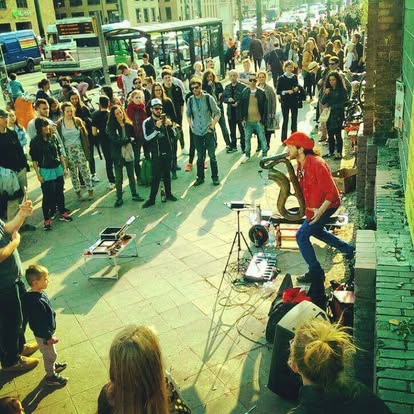
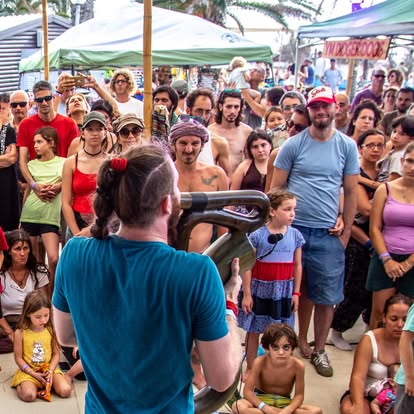
Berlin was an important stop, but the journey was already stretching much farther. I played in India, Berlin, Australia, and everywhere travel carried me, from streets and parks to underground spaces, festivals, and some genuinely big stages.
On a good day, busking in Berlin alone brought in €600. I never expected this strange, curved instrument to support me. But it did. More than that, it opened doors to people, places, and connections I still cannot fully put into words.
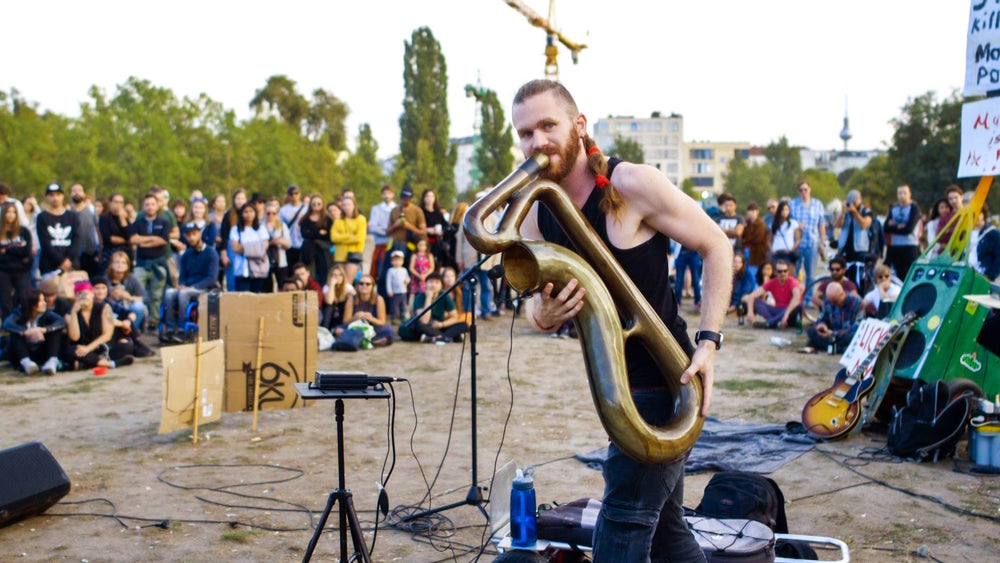
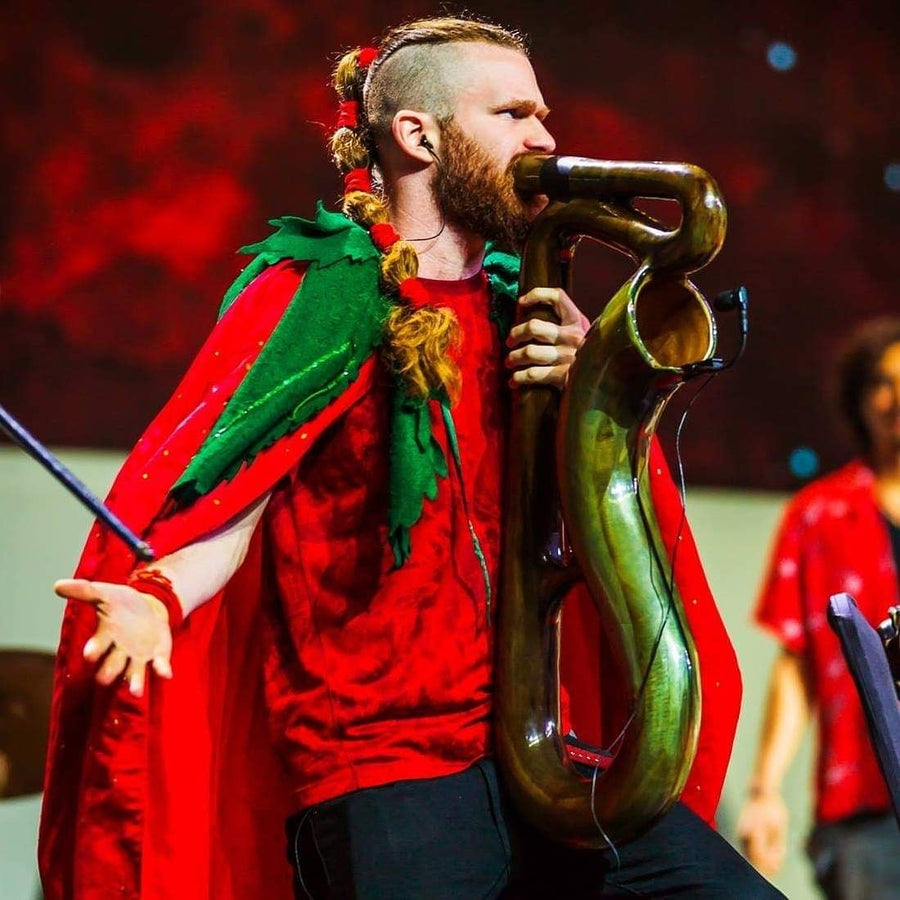
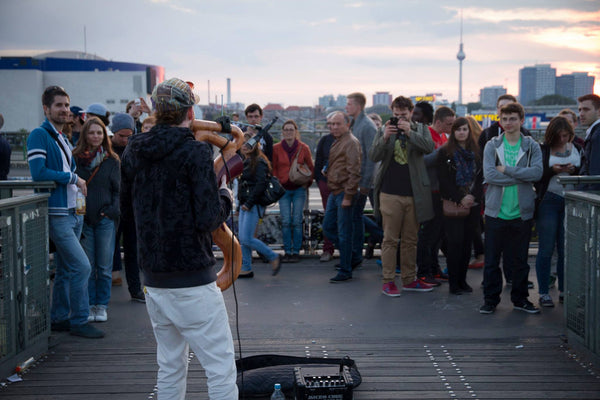

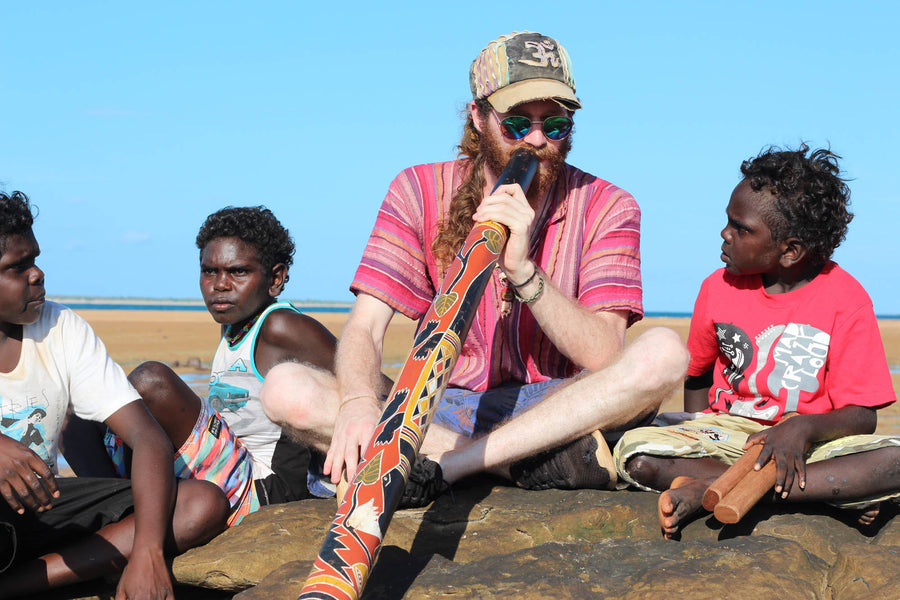
I will always be grateful to Djalu and Larry Gurruwiwi, their family, and the Yolŋu people who welcomed me, shared music with me, and blessed my path.
Meeting the Source 🇦🇺
My uncle’s words had stayed with me for years: “One day, you need to go to Australia and meet the Aboriginal people who created the didgeridoo.” Eventually I saved enough and made the trip.
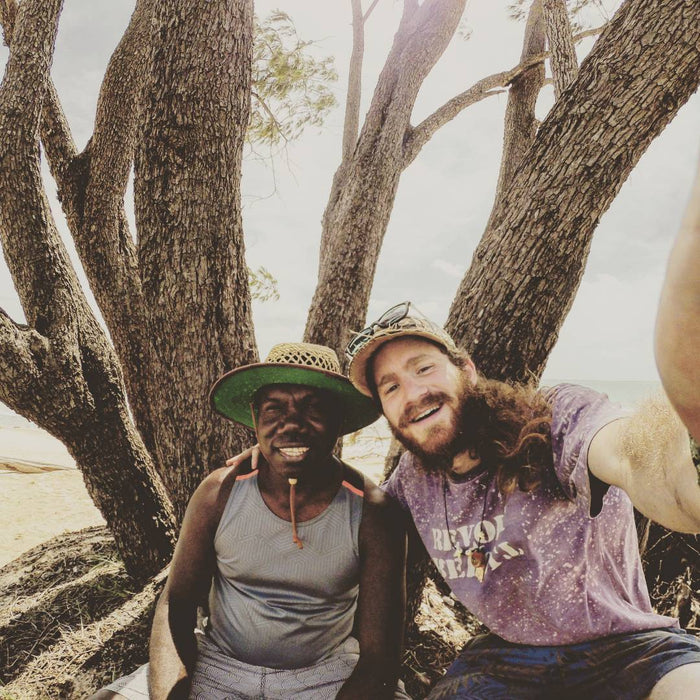
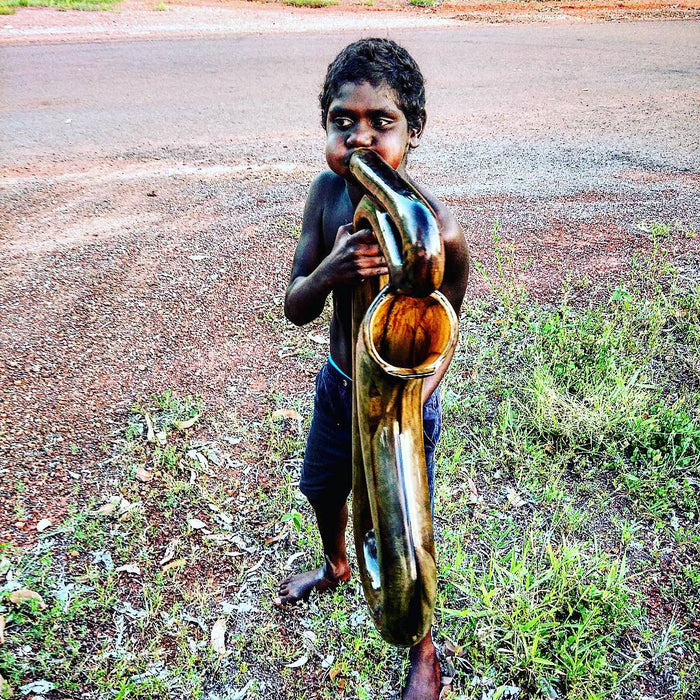
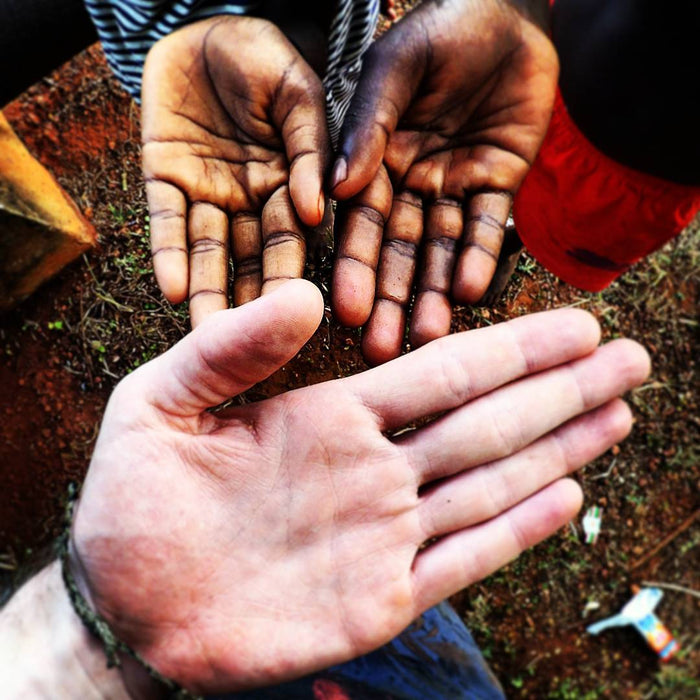
In Arnhem Land, deep in the Northern Territory, I found Djalu and Larry Gurruwiwi of the Yolŋu people. I was genuinely nervous. More than one person had warned me that bringing the Saxo-Didge into that world might be seen as disrespectful.
Then Larry saw it. He picked it up without a word and started to play. Within two minutes, the crowd around him was cheering. I felt deeply relieved. Seeing him enjoy the instrument while everyone celebrated felt like a huge success.
I stayed with them for a while, playing, talking, and being welcomed in a way I had not expected. During that stay I was blessed and told that I carry the healing power of the rainbow serpent, and that my task was to carry it into the world.




Reinventing the Instrument 🛠
Back in Berlin, the wooden Saxo-Didge cracked in the middle of a show. I somehow managed to finish the performance, but the failure made something clear. I had taken careful care of it and kept it protected in its bag, yet the material still had not survived. The sound was close, but it still was not the perfect instrument I had been searching for.
I remembered the work of Frank Geipel and Dan Flynn and decided to reach out again. I wanted a new sound design and materials that were lighter, stronger, and more responsive, while keeping that warm, organic character.
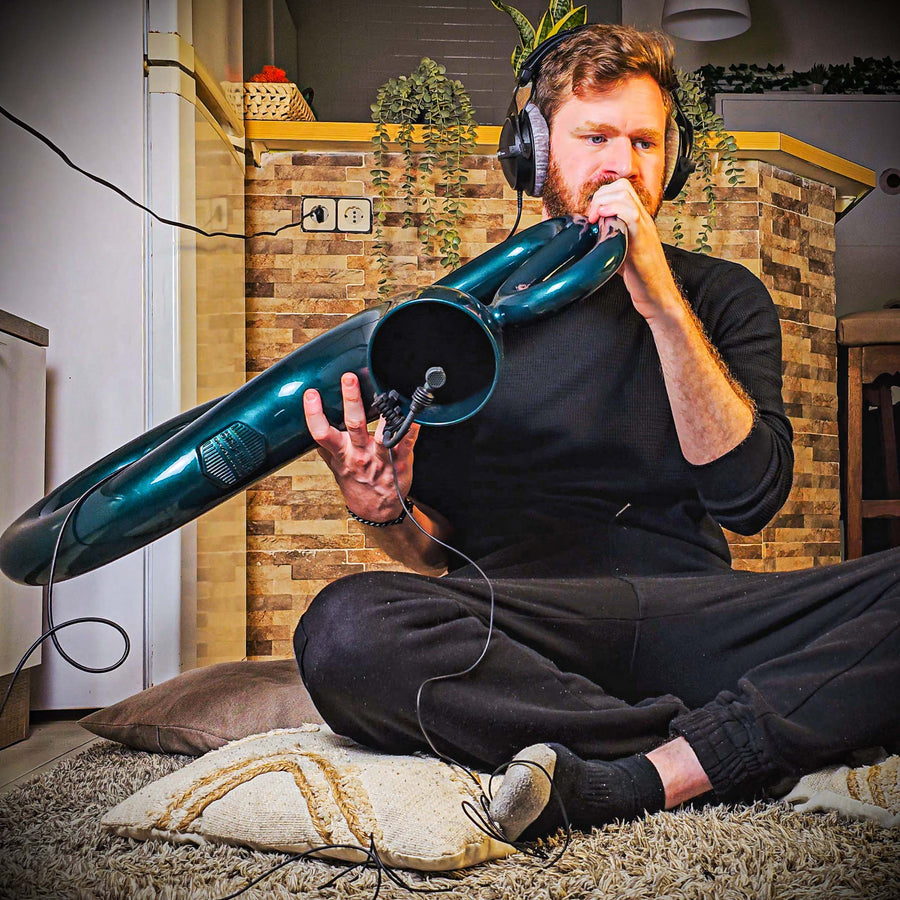
It took a very long time, many conversations, and many iterations before the sound and shape finally came together. That is how the Saxo-Didge was born.
Today: A Community, Not Just an Instrument 🌟
Years of traveling, playing, and building later, I can say this with real pride: the Saxo-Didge doesn’t belong to just me anymore.
It’s grown into something bigger: a global community of musicians, dreamers, sound healers, and creators, all pulled together by the same belief, that music has the power to genuinely connect people.
Calling it “just an instrument” stopped making sense to me a long time ago. It’s a journey. A movement. And one that feels like it’s only just getting started!
There’s a lot more to tell, honestly more than fits here, but some parts of this story are simply better lived than read about.
Welcome to the world of Saxo-Didge.
Dr. Frank Geipel
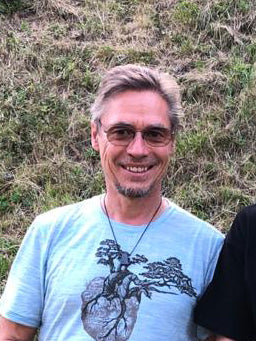
I owe an enormous thank you to Dr. Frank Geipel, the man I call the “DidgeFather.” Without him, the Saxo-Didge would not exist in its current form, and honestly, neither would much of the modern didgeridoo world.
Frank is a didgeridoo player, craftsman, and one of the world’s leading experts in mathematical modelling, specifically CADSD (Computer Aided Didgeridoo Sound Design) and Artificial Directed Evolution.
Using these methods, he controls nearly every sound characteristic an instrument can have. That starts with which note it plays, extends to the elasticity of the sound and the vocal notes that can be sung alongside it, and reaches its most impressive point in his control over the instrument’s overtones and trumpet notes, the feature that makes genuinely enchanting melodies possible using special playing techniques.

Dan Flynn
Huge thanks to Dan Flynn, performer, musician, and special sound designer. Near the beginning of my own didge journey, I found his videos on YouTube. They are a big part of why I wanted my instruments to play trumpet notes over the drone. Dan developed the Smooth Gypsy, Anyuta, El Pastor, and more models together with Frank.
Dan is one of the most avant-garde didgeridoo players you will find anywhere online, known for a playing style that is entirely his own. He is a passionate advocate for didgeridoos with genuinely special features: multiple trumpets tuned to scales or chords, special aircode tuning, enhanced wobbliness, and many other carefully designed characteristics.
He has spent years working alongside Dr. Frank Geipel on sound design. That rigorous research led to some of the most sophisticated CADSD instruments in the world, including the Smooth Gypsy featured on this website.
Dan is a sound consultant for Saxo-Didge today, and we have big plans together for future designs and collaborations.
Ready to find the Saxo-Didge that fits you?
Find your fit in about a minute


